
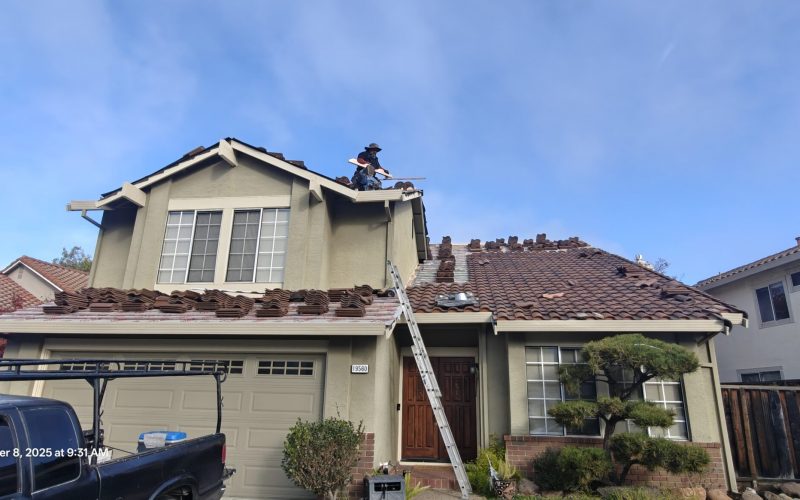
This roofing project in Castro Valley, California which involved carefully removing the existing roof tiles to access and prepare the roofing system underneath. Unlike a standard asphalt shingle replacement, tile roofing requires careful handling of both the individual tiles and the underlying components that provide the home’s primary weather protection.
Once the tiles were removed, the condition was evaluated snd prepared for the roofing system. The project included work across multiple roof planes and elevations, requiring detailed attention around valleys, ridges, transitions, and the home’s chimney.
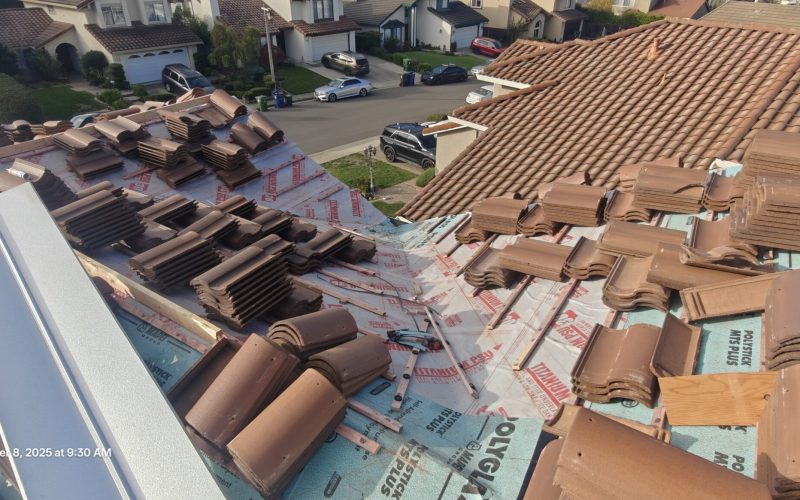
The tile roofing system was then reassembled to restore the home’s distinctive appearance while providing a properly prepared roofing assembly beneath the finished surface.
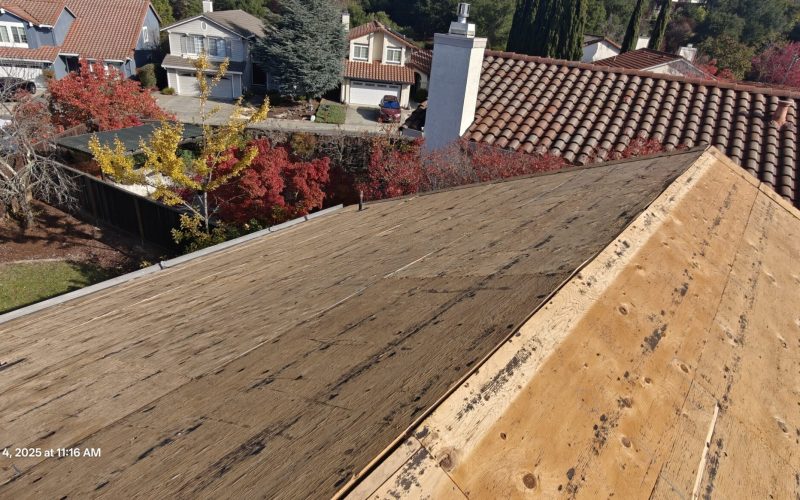
The existing roof tiles were systematically removed to provide access to the roofing materials and wood deck underneath. Tiles require more careful handling than standard shingles, particularly when portions of the existing material will be incorporated back into the finished roof.
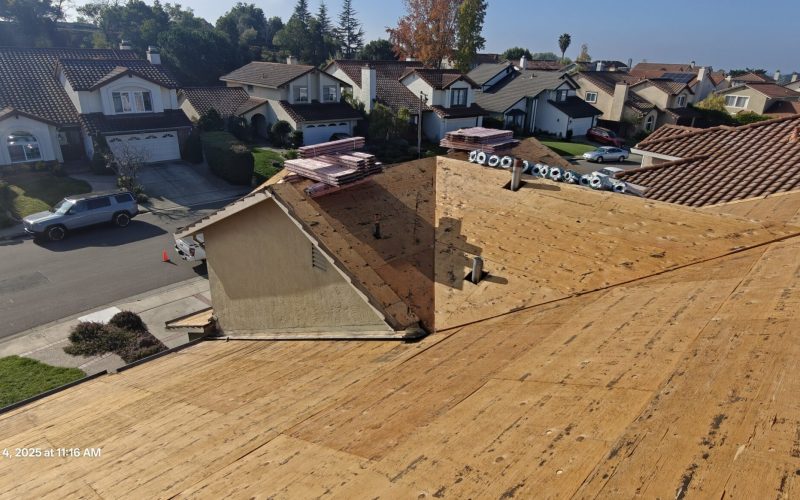
Removing the tile system exposed the wood decking beneath the roof. This allowed the team to inspect and prepare the underlying surface rather than addressing only the visible exterior of the roof.
The exposed decking was prepared to provide a stable foundation for the roofing system. Addressing the roof from the deck outward helps ensure the finished tile surface is supported by a properly prepared structure underneath.
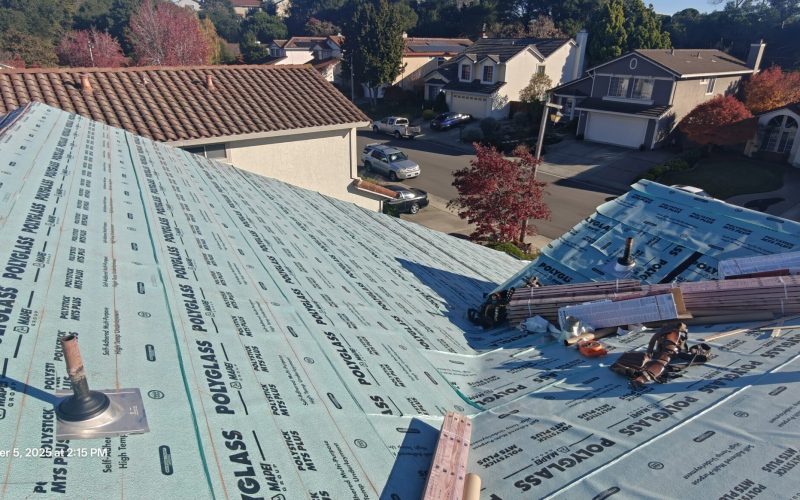
The home’s architecture includes several intersecting roof sections at different heights and pitches. These areas require careful coordination to maintain consistent protection across valleys, ridges, edges, and transitions.
The chimney creates an important transition point within the roofing system. The surrounding area requires careful roofing and flashing preparation to help direct water away from the structure and protect the roof underneath.
Following preparation of the underlying roofing system, the tile roof was reassembled across the home’s various roof sections. The finished installation maintains the property’s original architectural character and dimensional tile appearance.


The Mt. Jasper project in Castro Valley addressed more than the visible tile surface. By removing the existing tiles, the roofing team gained access to the underlying roof deck and roofing components so the system could be properly prepared before the tile was reinstalled.
Careful attention was given to the home’s multiple roof planes, valleys, ridges, transitions, and chimney area. Once the underlying work was completed, the tile system was reassembled to preserve the home’s established architectural appearance.
The completed project provides the home with a renewed roofing system while maintaining the classic tile finish that complements the property’s exterior.
Tile roofs require a different approach than standard asphalt shingle systems. The tiles themselves are only one part of the assembly, making the condition of the roof deck, underlayment, flashing, valleys, and transitions especially important to the roof’s overall performance.
Our team handles tile roofing projects involving careful tile removal, roof deck preparation, underlayment, flashing, chimneys, valleys, ridges, and complex multi-level roof designs. We address the underlying roofing system while taking care to preserve the appearance and character of the finished tile roof.
If your tile roof is aging, leaking, or showing signs of deterioration, schedule an inspection to determine the condition of both the tiles and the roofing system underneath.
Vallejo, Solano County
March 2026
Residential Roofing
Shingle Roofing
Complete Shingle Replacement
of a single-story home
22 sq ft
4 Days
Clay Shingles
Monday–Friday: 7:00 am-8:00 pm 24/7 Emergency Service
